Choosing the right wood: oak vs maple vs walnut
A guide to Janka hardness ratings and which wood species thrive in the Pacific Northwest climate.
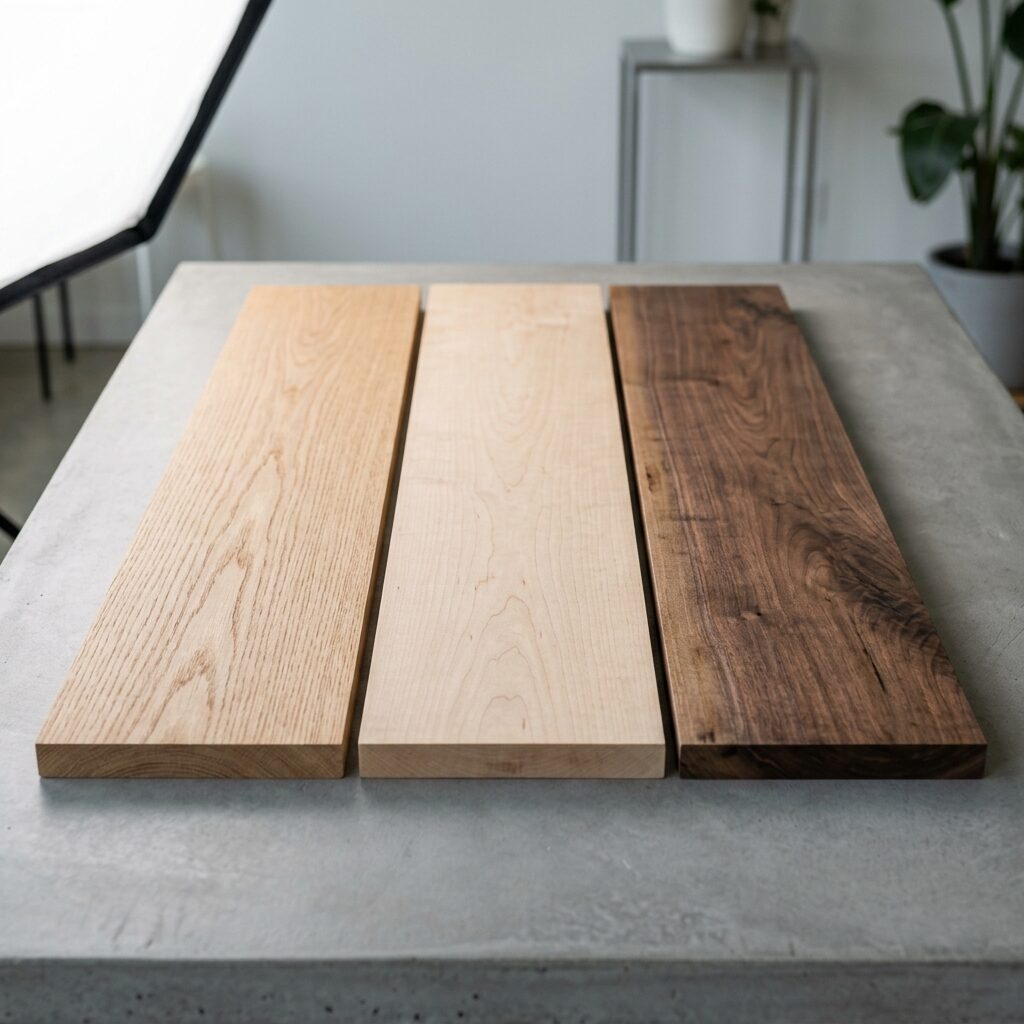
On the Janka hardness scale, Hard Maple (1,450 lbf) is slightly harder than White Oak (1,360 lbf) and Red Oak (1,290 lbf), while Black Walnut (1,010 lbf) is softer. However, White Oak is the #1 choice for Portland homes because its pronounced grain hides dog scratches better than smooth maple, it absorbs dark stains evenly without blotching, and its closed cellular structure (tyloses) resists Pacific Northwest winter moisture.
Selecting the right species for your hardwood floor installation in Portland, hardwood floor refinishing in Portland, or hardwood floor repair in Portland project involves more than picking a color. You need to compare Janka dent resistance, grain texture, stain compatibility, and how each species handles Oregon's seasonal humidity.
Technical comparison: white oak vs. red oak vs. hard maple vs. black walnut
1. Understanding the Janka hardness scale: maple vs. oak hardness
The Janka hardness test measures the force (in pounds-force, lbf) required to embed an 11.28 mm steel ball halfway into a wood board.
- Hard maple (1,450 lbf): Technically about 6.6% harder than white oak and 12.4% harder than red oak. Because maple has a dense, uniform, closed grain with almost no visible pores, it excels in gyms and modern kitchens kept in a natural blonde finish. However, because its surface is glass-smooth, any dent or scratch catches the light immediately.
- White oak (1,360 lbf) and red oak (1,290 lbf): The residential gold standard across Portland, Lake Oswego, and Beaverton. Oak combines high structural dent resistance with textured grain lines that visually camouflage everyday scuffs from kids and dogs.
- Black walnut (1,010 lbf): About 25% softer than white oak, prized for its unmistakable deep espresso-chocolate heartwood that requires zero stain.
2. Red oak vs. white oak in Portland homes
In the Pacific Northwest, white oak is our most requested species for both new installations and modern natural hardwood floor refinishing. Its mineral-tan tone pairs effortlessly with clear waterborne finishes like Bona NordicSeal and Bona Traffic HD Extra Matte, and its pores are plugged with natural tyloses that resist water penetration in kitchens and entryways. Red oak remains a timeless classic in mid-century and traditional Portland homes and is easier to match when weaving repairs into existing 1940s–1990s floors.
Ready to transform your floors? Get a Free Quote today to schedule an in-home sample consultation.
3. Stability in the Pacific Northwest climate
Portland indoor humidity swings between damp, rainy winters and dry, air-conditioned summers. Quarter-sawn or rift-and-quartered white oak and multi-ply engineered hardwood offer the highest dimensional stability, especially over concrete slabs or crawlspaces.
4. Grain pattern, staining, and lifestyle with pets
If you have large dogs or active kids, a wood with defined grain (white oak or red oak) hides small scratches far better than smooth maple. Furthermore, if you plan to stain your floors a medium or dark brown (such as Special Walnut or Jacobean), oak absorbs pigment evenly, whereas maple requires specialized water-popping and dye conditioners to prevent blotching.
Frequently asked questions
Q: Is maple harder than oak for hardwood floors?
A: Yes, slightly. Hard sugar maple scores 1,450 lbf on the Janka hardness scale, compared to 1,360 lbf for white oak and 1,290 lbf for red oak. However, oak often looks newer longer in busy homes because its open grain pattern hides micro-scratches and dents that show up clearly on maple's smooth, uniform surface.
Q: Which is better for Portland's humid climate: white oak or red oak?
A: White oak has a slight edge in wet Pacific Northwest entryways and kitchens because its cellular vessels are sealed with natural structures called tyloses, making it more water-resistant than open-pored red oak. Both perform exceptionally well when properly acclimated to 6%–9% equilibrium moisture content (EMC).
Q: Why is maple hardwood difficult to stain dark?
A: Hard maple has extremely tight, microscopic wood pores that resist absorbing traditional oil pigment stains evenly, often resulting in a blotchy or streaky appearance. Maple looks best with a clear non-yellowing waterborne finish like Bona Traffic HD, whereas white and red oak accept any stain tone cleanly.
Q: Does black walnut hardwood floor dent easily?
A: At 1,010 lbf on the Janka scale, American black walnut is softer than oak and maple, so high heels or dropped cookware will leave small indentations over time. Homeowners who choose walnut love its rich, organic chocolate color and accept a natural lived-in patina—or choose Bona Traffic HD Extra Matte to minimize glare over minor dents.
Not sure which one to pick? We can bring samples to your home. Schedule a consultation.
Where Hardwood Floors PDX works
We handle hardwood floor refinishing, dustless sanding, hardwood floor installation, hardwood floor repair, buff and recoat maintenance, Douglas Fir floor refinishing, luxury vinyl plank installation, tile installation, and commercial floor restoration across Portland, Lake Oswego, West Linn, Beaverton, Tigard, Tualatin, Sherwood, Hillsboro, Aloha, Bethany, Happy Valley, Clackamas, Oregon City, Milwaukie, Wilsonville, Gresham, and Damascus, as well as historic neighborhoods like Irvington, Laurelhurst, Sellwood, Alberta, Alameda, Hawthorne, Mount Tabor, Eastmoreland, Ladd's Addition, Nob Hill, Pearl District, Richmond, St. Johns, First Addition, Westlake, Marylhurst, and Willamette. Preview stain tones in our interactive floor visualizer, explore our realtor and escrow partner program, or request a free quote directly from owner-operator Pavel Popovici.
Topics